Columbanus as “The Man Who Saved Europe”

In the United States today, we are plagued by hatred, racism, and fear. We suffer political leaders who are unable to rise to the challenge of creating a truly United States, let alone a united world. Many religious leaders among evangelical Christianity, which seems to be nearly the only form of Christianity the news media cover, lack the will, the grace, the talent, or the insight to break new paths forward for all people in creating God’s realm here on earth.

It is a grim situation. And though the scale and context are different, the challenges we face in the 21st century are in some ways similar to those faced on the European continent in the early Middle Ages, after the cataclysmic fall of the Roman Empire and the creation of power vacuums across the continent. The church that the Empire had embraced was in utter disarray, having sold out to powers and principalities that Jesus himself opposed. How would the death spiral of political and ecclesiastical decline be stopped? One answer came from the Irish monastic tradition.

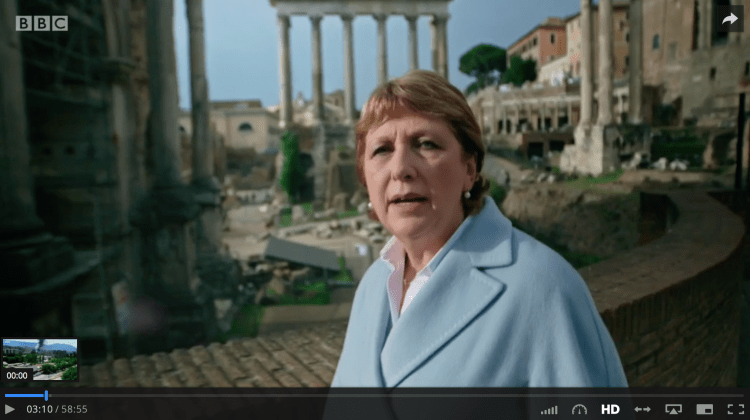
In a really beautiful, hourlong documentary produced by the RTE and rebroadcast by the BBC, former Irish President Mary McAleese makes the case that St. Columbanus, a monk who left from Bangor (near modern Belfast) and set up monasteries on both sides of the Alps, essentially provided the spiritual vigor and leadership to pull European Christianity back from the  precipice. In all, Columbanus and his successors founded more than 100 monasteries, which became centers of learning where young leaders who would become heads of European dynasties were educated.

The documentary also features Alexander O’Hara, a fine scholar (with a Ph.D. from St. Andrews…I’m slightly biased…) who has done extensive research on Columbanus and his biographer, Jonas of Bobbio. Rather than tell you all about it, here is a link to the informative and approachable film, Mary McAleese & the Man Who Saved Europe. 

What was it Columbanus was able to do where others failed? What kind of vision does it require to found religious institutions in an era when they are being deserted? Wouldn’t it be nice to have a president bright enough to do a documentary?

Screen Shot 2017-08-15 at 6.07.02 PM


Sabbatical 2017: Chasing after St. Columbanus

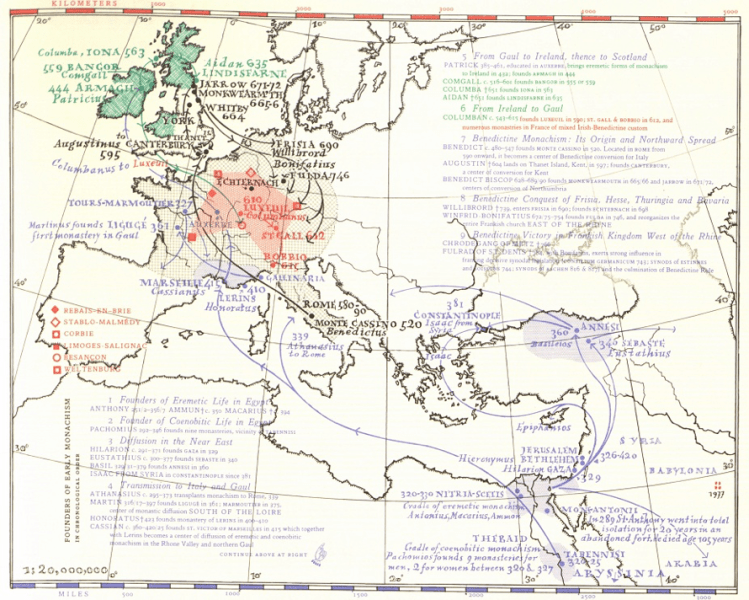
EU map from Plan of St Gall
Map of monastic development from The Plan of St. Gall in Brief by Lorna Price

It is a beautiful, hot, sunny summer day in Colorado, and I’m getting things lined up to embark on the pilgrimage portion of my sabbatical as senior minister of Plymouth Congregational UCC in Fort Collins.

Sabbatical is meant to be a time set apart – sabbath time – for rest, reflection, study, time with family…things that sometimes take the back seat in the everyday deluge of parish ministry in a larger congregation. I am really grateful to our congregation and to the UCC for making this a priority for those of us who serve in this ministry. And thanks to those who have generously given money to Plymouth to support this journey!

The theme of this pilgrimage will be to follow in the footsteps of an Irish monk named Columbanus (or Columban)…not Columba of Iona, but rather a monk who was born in Leinster in about 543 and died at the monastery he founded in Bobbio, Italy in 615. He is best remembered for re-evangelizing Europe in the early middle ages after the decline of the Roman Empire (and with it the imperial Christianity it fostered, which had but a toehold in central Europe).

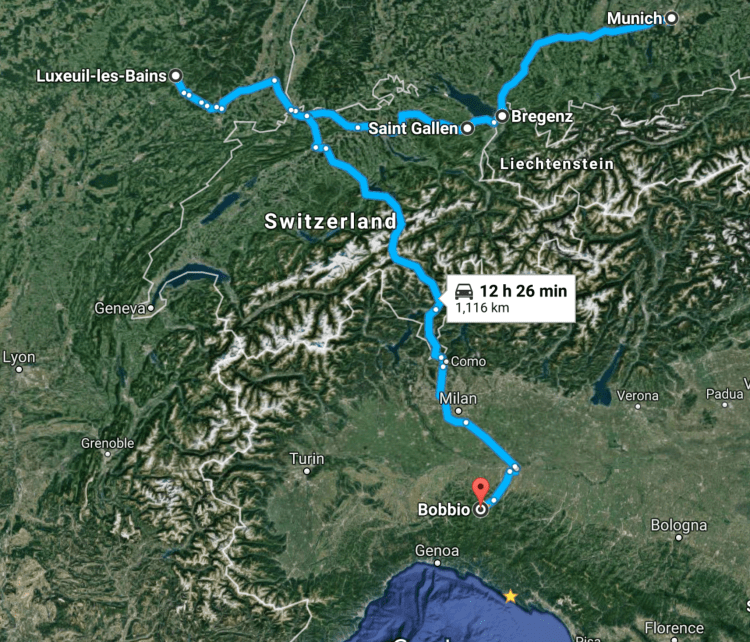
Columbanus was indeed a peregrinus – a pilgrim for Christ who forsook his lush Irish homeland in order to bring the gospel to those in foreign lands. Together with 12 disciples, Columbanus left from Bangor (near today’s Belfast) and set sail for Frankish Gaul (France), landing on the west coast in 585 and proceeding toward the Rhine, where he worked with local Frankish rulers to found monasteries at Fontaine, Annegray, and Luxeuil. He later ran afoul of the state when he refused to baptize the illegitimate child of the king, and he and his Irish monks were banished…but not for all that long. They returned to found monasteries in what is now Bregenz, Austria; St. Gallen, Switzerland; and Bobbio, Italy. All told, Columbanus and his disciples founded more than 100 centers across Europe.

According to Mary McAleese, former President of Ireland, Columbanus essentially united Europe by reintroducing orthodox monasticism from Ireland into the continent. And author Thomas Cahill credits him with being foremost among the Irish who “saved civilization” by bringing classical literature, learning, and Christianity back to the continent.

Screen Shot 2017-07-31 at 1.42.39 PM

My travel plan begins with a nonstop Lufthansa flight from Denver to Munich, and after an overnight, I’ve got a car leased for the next six weeks. After driving through southern Bavaria, my first stop is the Cistercian Abbey in Bregenz, Austria, where I will spend several nights with the brothers. A short trip will bring me to the great monastic library at St. Gallen, Switzerland. (St. Gall was an Irish monk, and one of Columbanus’s twelve disciples.) I’ll do a short side trip to the monastic island of Reichenau in the Lake of Constance, and then continue on to Luxeuil-les-Bains. I’ll spend time visiitng the archeological site at Annegray as well as the monastic buildings in Luxeuil. The final leg of the Columbanus part of the pilgrimage will be to cross the Alps into Italy and to conclude in Bobbio, where Columbanus’s tomb is located within the abbey he founded there.

How did an Irish monk succeed where others had failed in establishing a resilient Christian faith in Europe? And while we’re not likely to embrace his profoundly ascetic monastic rule, are there things we can learn from it 1,400 years later? I hope to address these and other questions as I become a pilgrim chasing after St. Columbanus.

If you wish, go ahead and subscribe to receive updates on this blog, and you’ll start seeing posts in early September when I arrive in Europe.


Screen Shot 2017-07-31 at 4.20.23 PM

Cimitile: Saints Felix, Paulinus, and Spreading Wealth in the Early Church

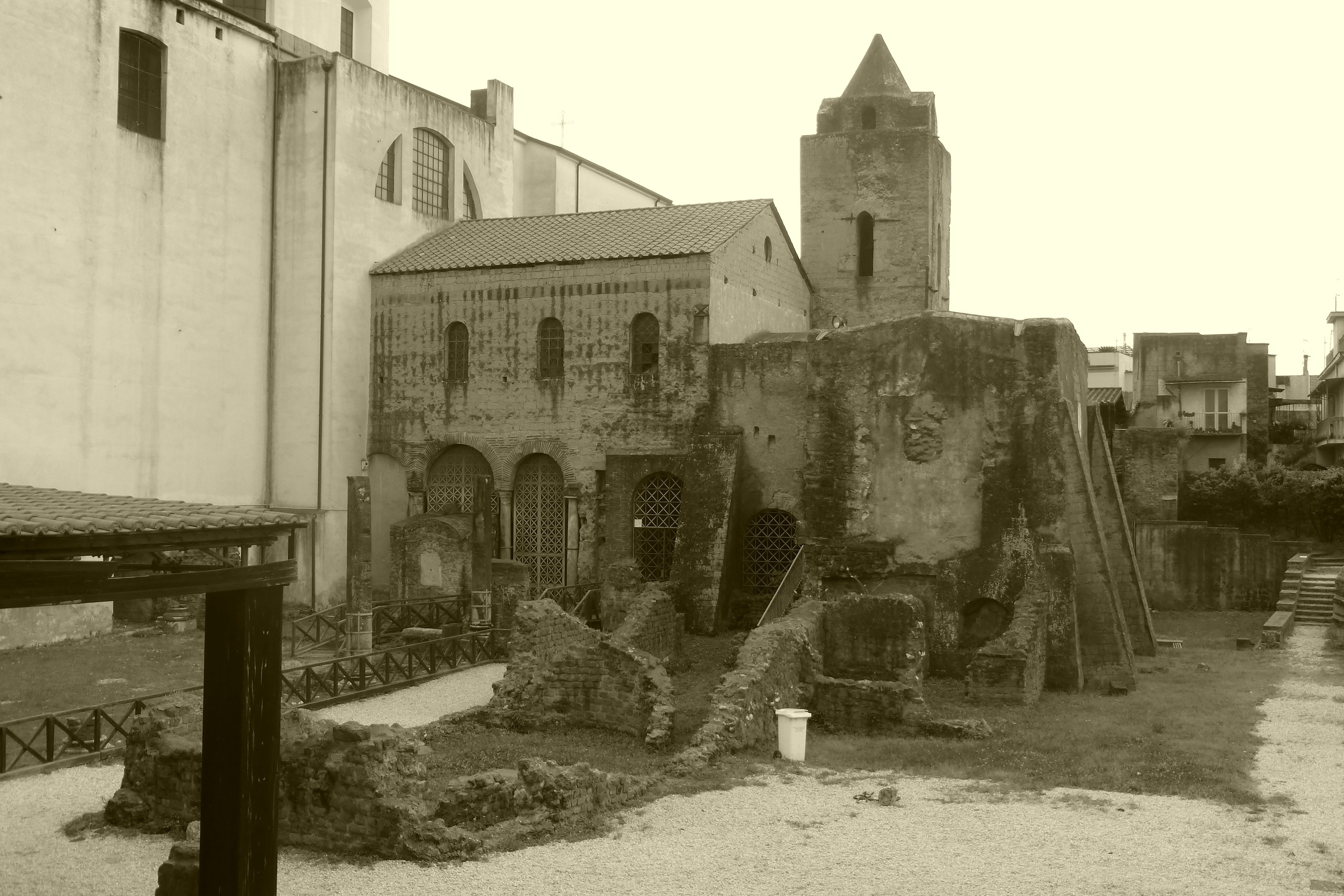
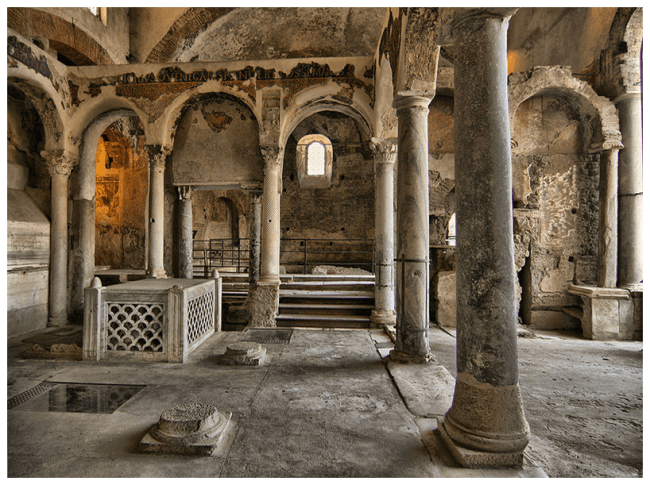
ImageCimitile is not easy to reach, at least by 21st century standards. It’s on the outskirts of Nola, a town in Campania. When we visited, our bus dropped us off on some distance away from the paleo-christian basilica, and as we walked through town, people looked at us as if to inquire why tourists would want to be in Cimitile. (The name is linguistically linked to the Italian word for cemetery, and it was a burial place even before Christianity arrived.) When we finally reached the archeological site, we found locked gates, but after a few well-placed phone calls, someone came and unlocked the padlock and chain that kept us from our destination. 

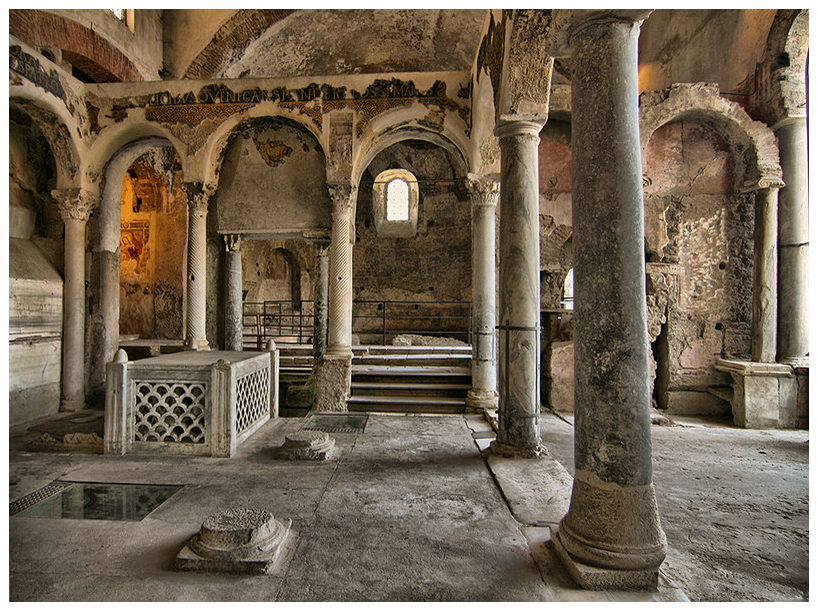
I’m not sure any of us knew what to expect; the town was quaint and unassuming, and the site wasn’t even open when it was meant to be (not altogether uncommon in Italy). But it was the most amazing place we visited anywhere in Italy, in part because the treasures were not behind glass in a museum display, but in situ – right there before us. 
Image

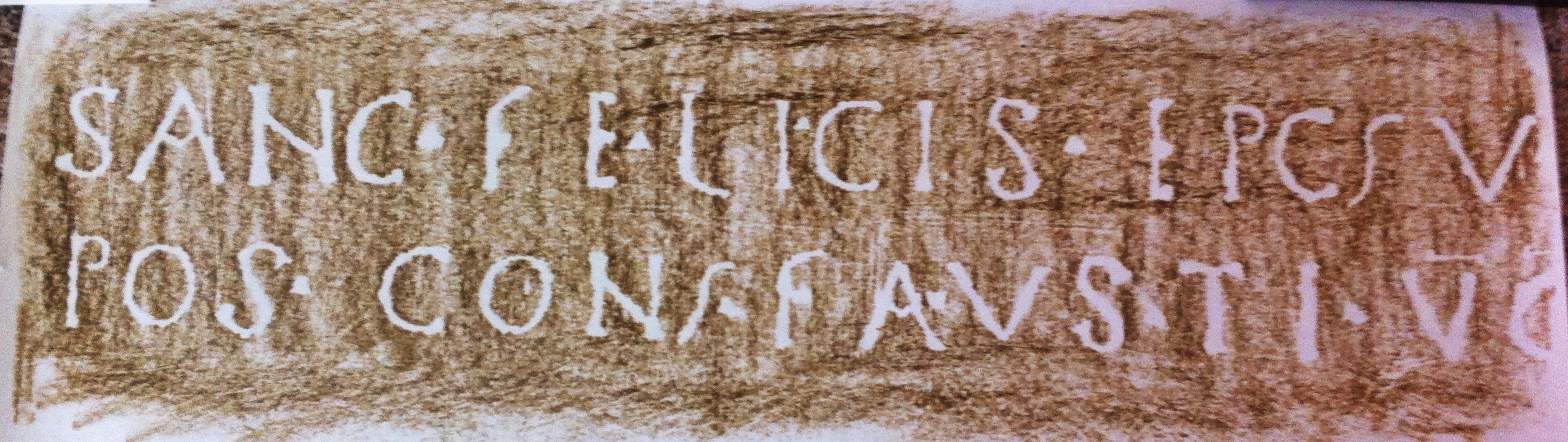
Cimitile was the burial place of St. Felix, a Syrian immigrant who had been ordained and then tortured for his Christian faith. When his father died, Felix sold everything and gave it to the poor (as Jesus instructed in each of the synoptic gospels). Felix became bishop of Nola, died around 250 AD, and his small tomb was visited by a young Christian nobleman from Bordeaux, whose family owned farms nearby. The rich young man was later named governor of the province of Campania in the southern heartland of Italy. 

This governor was of the senatorial class, Paulinus, a contemporary of St. Augustine,  returned to his wife and his properties in Gaul and then moved to other properties in Spain following the death of their only son. During his time there, Paulinus was ordained as a priest and then with his wife, renounced his formidable wealth and decided to return to Cimitile, where he devoted years to building a shrine to St. Felix. 
Image

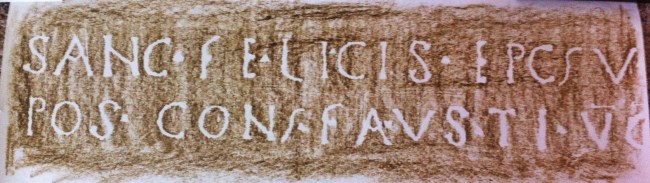
Wax rubbing of St. Felix’s tomb inscription at Cimitile

What as most amazing about Paulinus was not that he was a married priest (not that uncommon in the 300s) or that he was from Gaul. Rather, it was that he was one of the ultra-rich of his day. Many clergy (with notable exceptions like Ambrose of Milan) had come from the middling part of the social scale. Not only was Paulinus on the Forbes List of ancient Rome, he was noble by birth.

But how does one dispose of so much property? You’ll have to read a GREAT book by Peter Brown (Through the Eye of a Needle: Wealth, the Fall of rome, and the Making of Christianity in the West, 350-550 AD) to find out the whole story. The short answer is slowly… Paulinus took his immense wealth and created a monastic community at Cimitile. It took more than seven years to create the compound dedicated to St. Felix, which became a major site for pilgrimage. The poor were fed and clothed as they visited the shrine. While Paulinus’s wealth previously insulated him from contact with the destitute, Brown says that “in Cimitile, Paulinus was constantly in contact with the poor.” (p. 235) Brown describes his “open-handed generosity. He provided them with warmth and wine.”

One of the other things that makes Paulinus unique is that he was also a poet of great renown. Not only did he create a monastic community and a shrine, he imbued it with words that entwined his faith with his creation. Paulinus wrote,

For this hope does not abruptly deprive us of our possessions. If it prevails and faith conquers, it changes for the better and transforms our wealth according to God’s law, making it no longer brittle but eternal, removing it from earth and setting it in heaven.

Again, Paulinus draws on the synoptic gospels. Here is Luke’s version: “Make purses for yourselves that do not wear out, an unfailing treasure in heaven, where no thief comes near and no moth destroys. For where your treasure is, there your heart will be also.” Seldom in the history of Christianity do we see such a bold example of renunciation of immense wealth. 

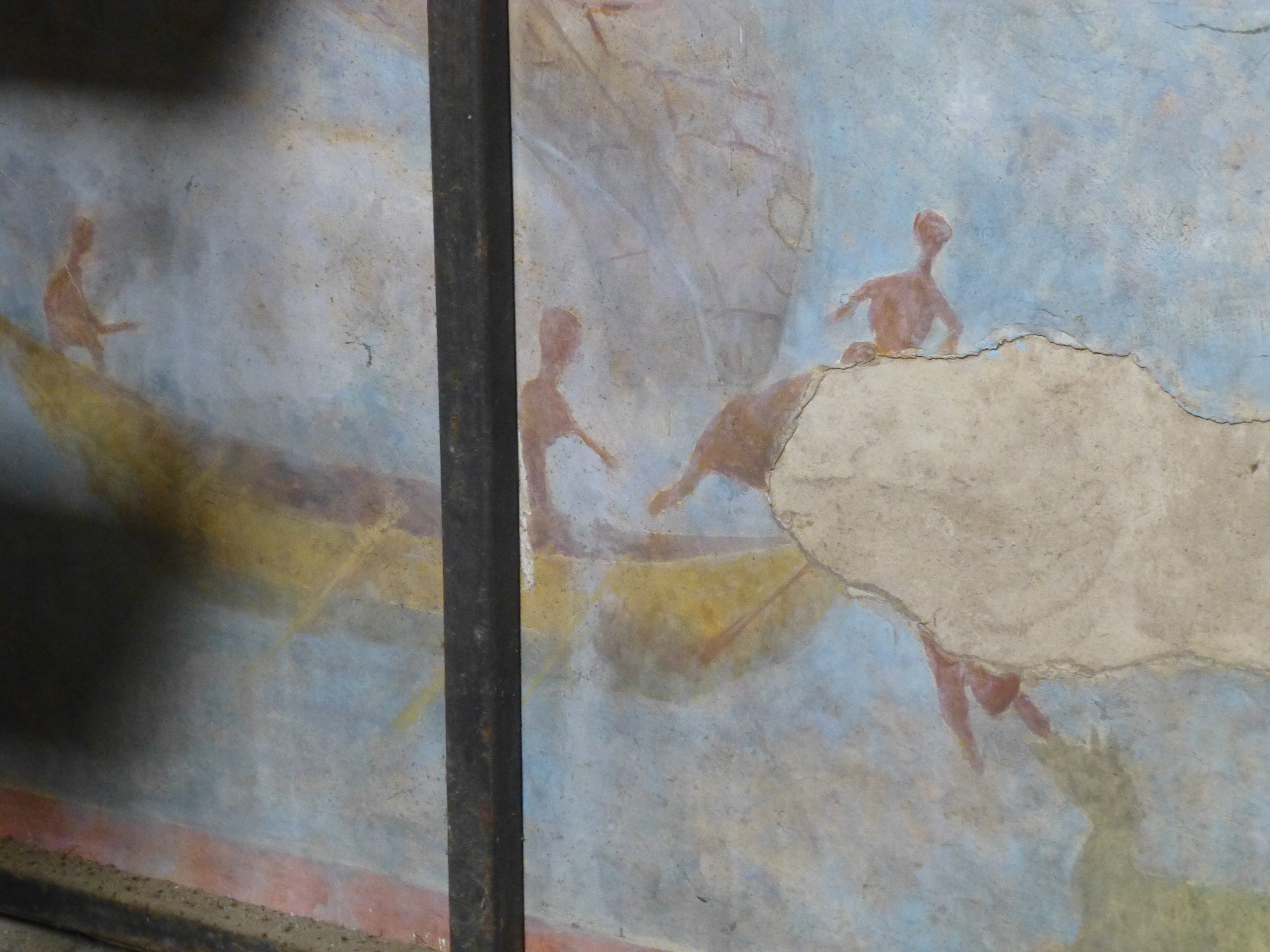
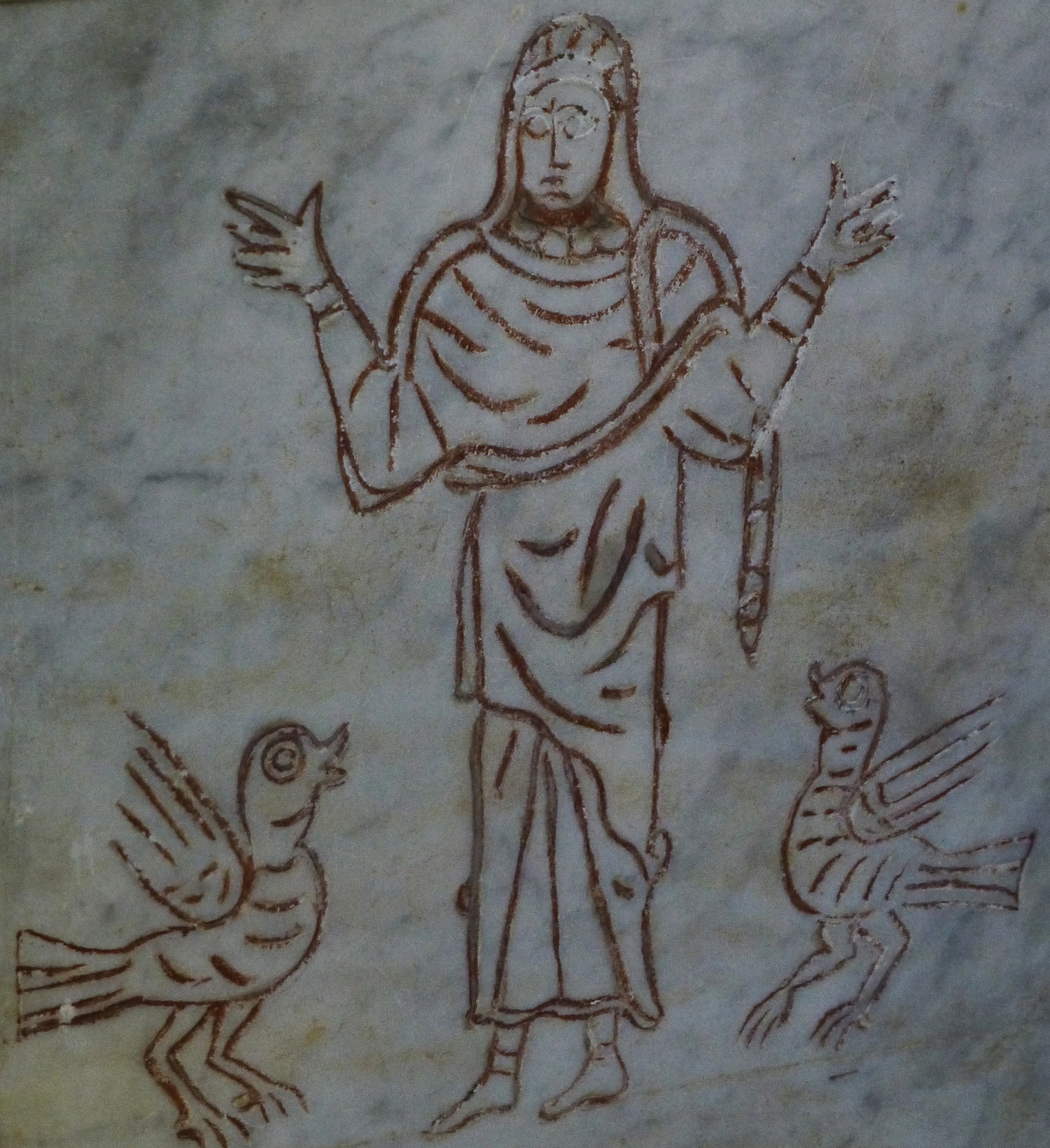
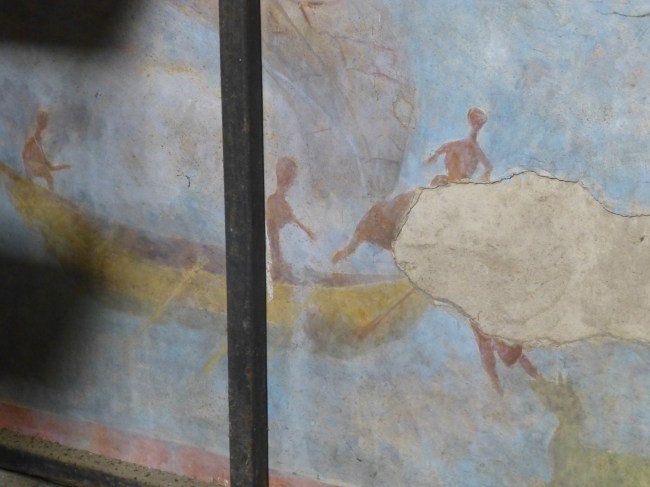
The frescoes at the shrine, from the 9th century, are also instructive. The scenes of salvation are “this worldly,” unlike many images we’ve come to think of. Below are two biblical scenes of salvation: Jesus calling the disciples from their nets and Jonah and the great fish.

Image

Image

Jonah and the “whale” are at the bottom right, below the missing fragment of plaster.


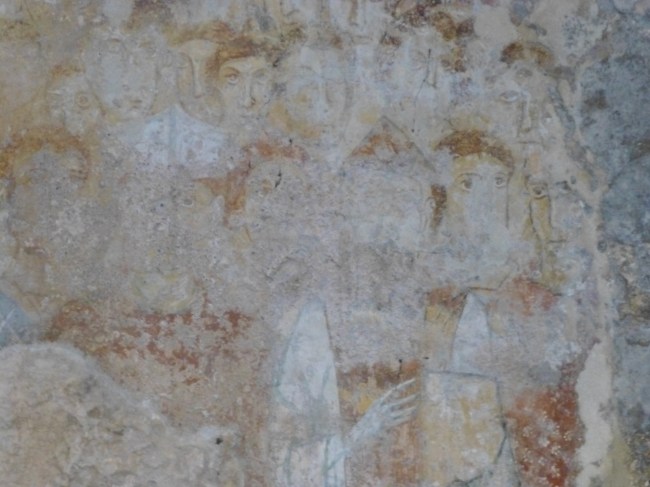
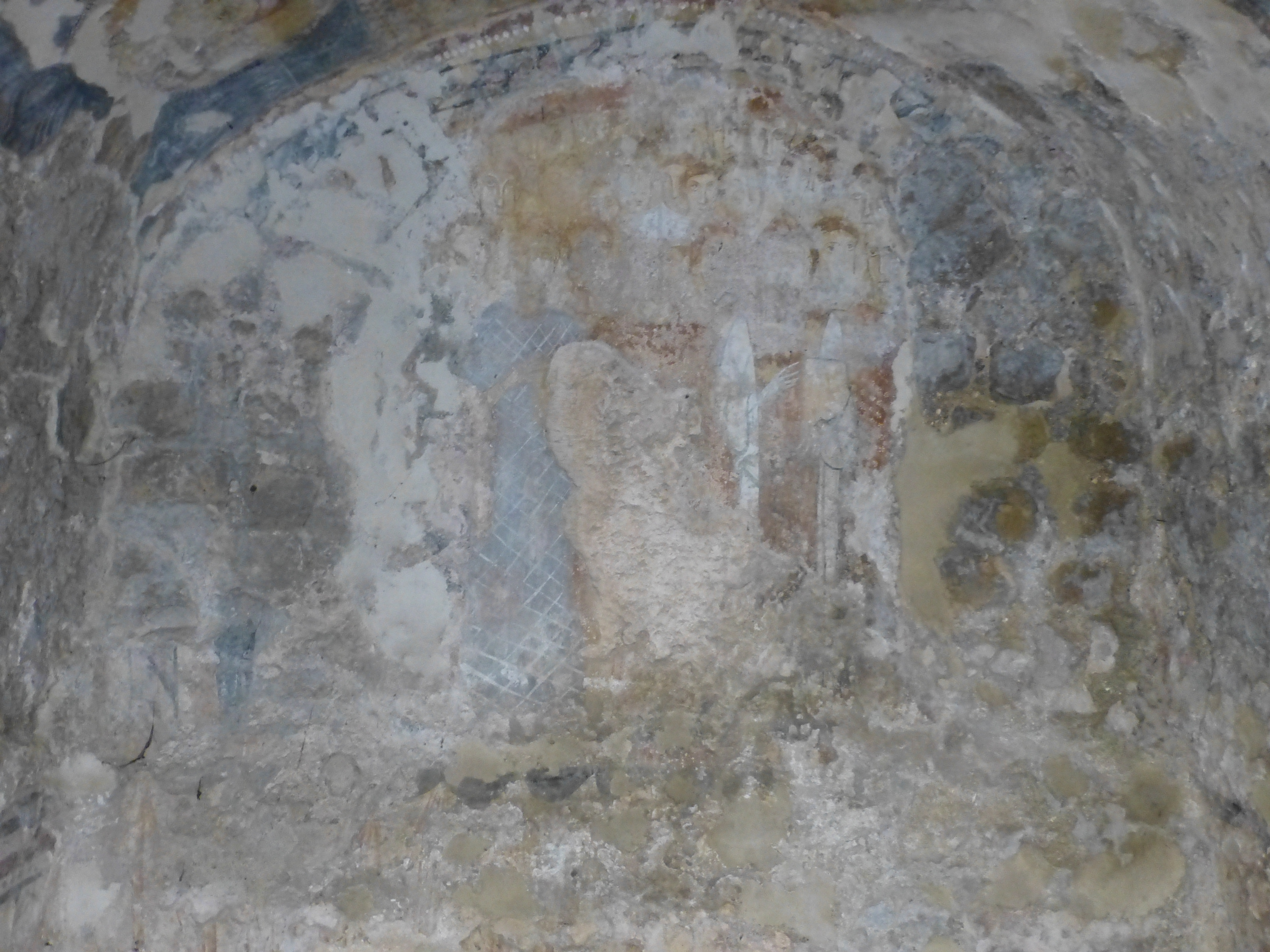
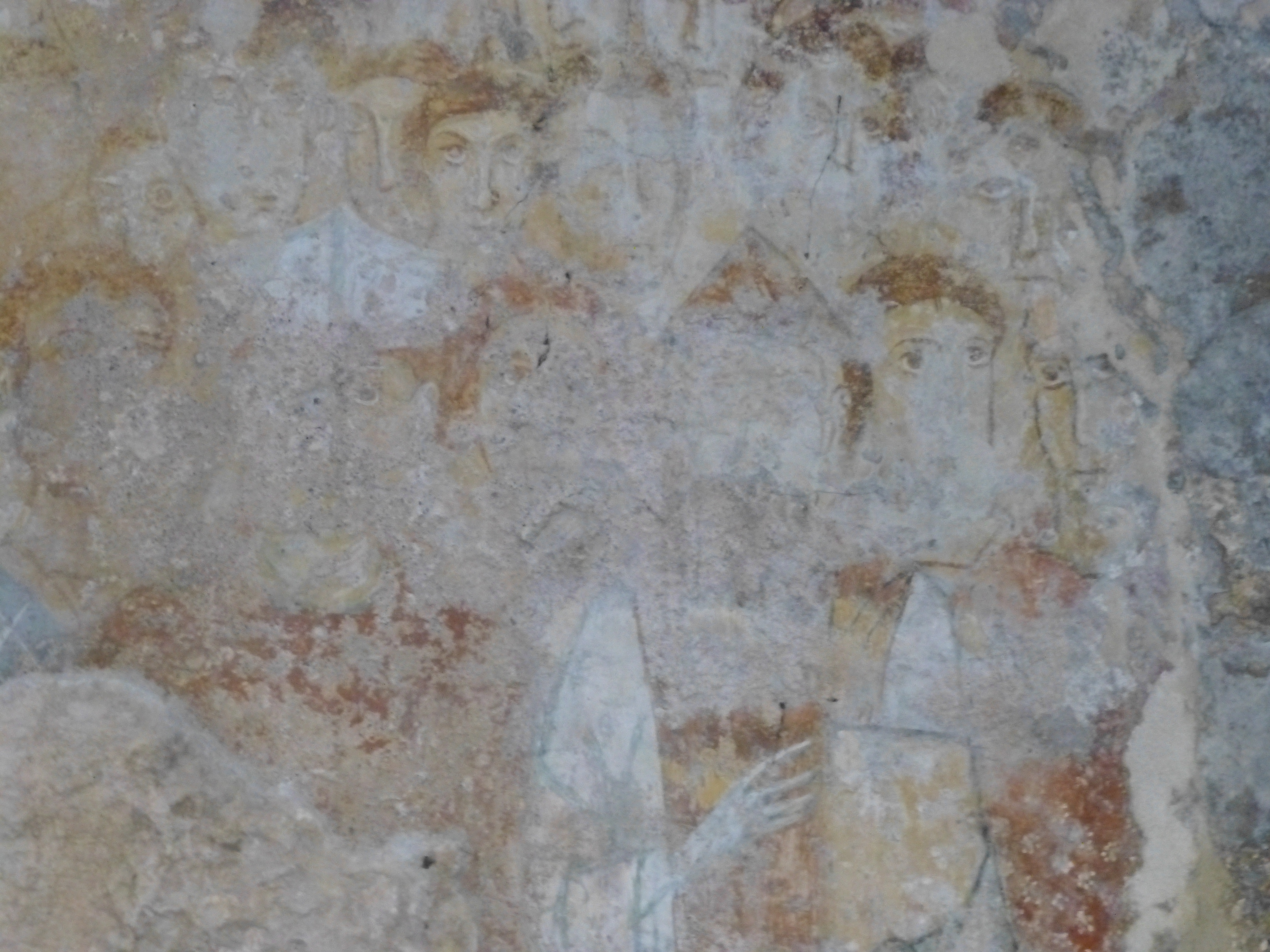
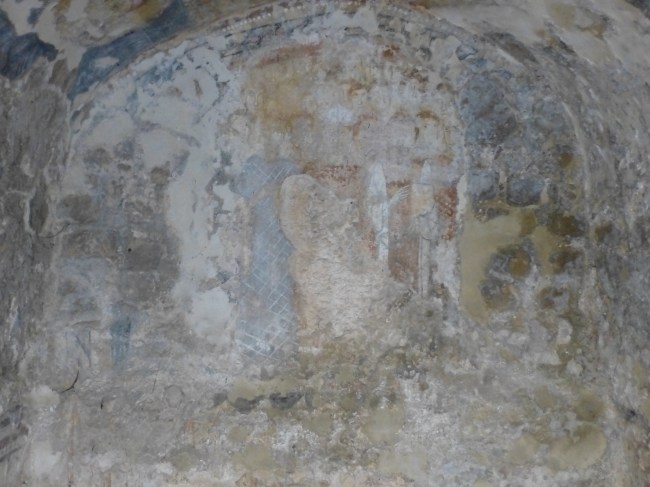
These frescoes are just right there in the chapel (away from the weather, but only just), and they are 1,200 years old! The most moving frescoes for me, however, were earlier ones that I found under the alcove arches across from the tombs of Saints Felix and Paulinus. They are almost invisible at first. As one looks closer, one sees the faces of early Christians – part of this incredible monastic community, perhaps – looking out to us across the ages. Men and women who share a faith in God that is in a lineage with our own. 

We have the words and the monastic settlement of Paulinus, but we have the faces of these anonymous Christians, which I find incredibly moving. 
ImageImage


Look into the eyes of these early Christians and try to imagine what they experienced. Consider their faith as it was coming to this part of the world. For us Christians in the West, they are our ancestors in the faith. Look into their eyes and imagine what they might say to you from across the ages.


Theodora, Praxedes, and the Role of Christian Women in Ancient Rome

ParsonsBench's avatarPeregrinus

Yeah, that sounds a lot like a dissertation title, but the images of women in Roman mosaics from the second through ninth centuries in Rome, as well as art on early Christian sarcophagi suggest that the role of women in the early church was not that of second-class citizen.

Paul the Apostle writes to the church in Rome, “I commend to you our sister Phoebe, a deacon of the church at Cenchreae, so that you may welcome her in the Lord as is fitting for the saints, and help her in whatever she may require of you, for she has been a benefactor of many and of myself as well.”

Not only did some women in the early church have power (like the deacon Phoebe), but they some had wealth as well. What Paul is describing is a patron-client relationship, common throughout the ancient Mediterranean. Paul is the client and…

View original post 779 more words

Theodora, Praxedes, and the Role of Christian Women in Ancient Rome

Yeah, that sounds a lot like a dissertation title, but the images of women in Roman mosaics from the second through ninth centuries in Rome, as well as art on early Christian sarcophagi suggest that the role of women in the early church was not that of second-class citizen.

Image

Episcopa Theodora, Saint Praxedes, Mary the mother of Jesus, Saint Prudentia from the Chapel of Zeno, Church of Saint Praxedes, Rome

Paul the Apostle writes to the church in Rome, “I commend to you our sister Phoebe, a deacon of the church at Cenchreae, so that you may welcome her in the Lord as is fitting for the saints, and help her in whatever she may require of you, for she has been a benefactor of many and of myself as well.”

Not only did some women in the early church have power (like the deacon Phoebe), but they some had wealth as well. What Paul is describing is a patron-client relationship, common throughout the ancient Mediterranean. Paul is the client and Phoebe is the patron (prostatis). It is worth noting that the Church of Rome today will not ordain women as priests or as deacons…and they wonder why the few priests willing to serve large parishes are worked to death. On a purely tactical level, if they opened the diaconate and the priesthood to women, they would effectively double their clergy pool! But, I digress.

Paul continues to write to the church in Rome, “Greet Prisca [a woman] and Aquila, who work with me in Christ Jesus and who risked their necks for my life, to whom not only I give thanks, but also all the churches of the Gentiles.” They were likely a married couple who did ministry together with Paul. Married? A woman in ministry?

“Greet Andronicus and Junia,” writes Paul about a man and a woman he describes as “my relatives who were in prison with me; they are prominent among the apostles.” Wait a minute…did Paul just call a woman a prominent apostle? Yes, he did.

All of those passages are at the end of Paul’s Letter to the Romans in chapter 16. In the “old” Revised Standard Edition, the editors used the masculine form of Junia’s name (Junias), because they found it inconceivable that the text provided the name a prominent female apostle. (Check any Greek New Testament, it says Junia.)

Image

reading along the left margin (top to bottom): Theodora
reading along the top (left to right): Episcopa

The first thing I noticed about the four women depicted in the above mosaic was that one had a square nimbus…which means that she was still living at the time the mosaic was created. And she is the only one of the four identified by name: Theodora. And her title is Episcopa, the fem. version of the male noun Episcopos, which literally means over (epi-) seer (-scopos) and is what we translate into English as bishop. She was the mother of Pope Paschal I, who built the edifice and commissioned the murals in the 9th c. We don’t have records of who consecrated her as bishop…but if she was not a bishop, why label her as such…and with a nimbus to boot? Filial piety only goes so far. Some have written this off as a way to honor Theodora as the wife of a bishop. Huh? Why isn’t her husband depicted with a nimbus, alongside Saints Mary, Praxedes, and Prudentia? He’s not even there.

Image

St. Praxedes and Paul…equals in this image.

Praxedes (Prassede in Italian) was said to have died in 165 as a martyr (about 100 years after Paul was apparently martyred in Rome). She took care of those Christians who had been injured in the persecution and was entombed in the catacombs of St. Priscilla along with her sister, Prudentia. In the ninth century, her remains were removed and placed in the crypt of the church built in devotion to her by Pope Paschal.

In the above mosaic from the chancel of the church, she is shown with St. Paul as an equal. He has his arm around her shoulder in a very collegial manner. She is depicted as being as tall as he is and in a manner that conveys them as being of similar status. Interesting that they could pull this off in the 9th century. Did you see any women at the recent conclave that elected the pope…12 centuries later?

You may have heard a 2006 NPR report on a feminist pilgrimage that included the Church of St. Praxedes, reported by the inimitable Sylvia Poggioli. If you missed it, here is a link. (The one major omission of our pilgrimage was not inviting Sylvia Poggioli to dinner one night!)

Image

From around 350, the inscription on this memorial mosaic reads, “Flavius Julius Julian, husband, to Simplicia Rustica, beloved wife, who lived 18 years, 5 months, and 15 days. She was my spouse for 3 years and and 2 months. May she rest in peace. She was buried January 23.” Her hands are raised in prayer.

And in the Pio Christiano Museum within the Vatican Museums, figures of a woman in prayer kept recurring among sarcophagi and in a stunning mosaic memorializing a young woman. Among the earliest Christian inscriptions is one of a woman named Petronia on the side of her marble sarcophagus. It shows her again in the position of prayer, which in the ancient world was emblematic of piety and faithfulness. And like the image of the man carrying a ram for sacrifice, it was used both in Christian and pagan depictions of piety.

Image

We can’t know everything about the role of women in early Christian communities in Rome, but indications point not simply to their presence, but to their leadership. The church today is losing out on the gifts of women for ministry every time we act or even think that women should play anything but an equal role in clergy leadership. You wouldn’t think this would still be an issue…but it is for Roman Catholics, Eastern Orthodox, fundamentalist and some evangelical Christians. All I can say is look to our past and look to your future.

Religion – War – Victory – Peace

Dom and Sarah Crossan in front of the Ara Pacis Augustae in Rome

Dom and Sarah Crossan in front of the Ara Pacis Augustae (Altar of Augustan Peace) in Rome

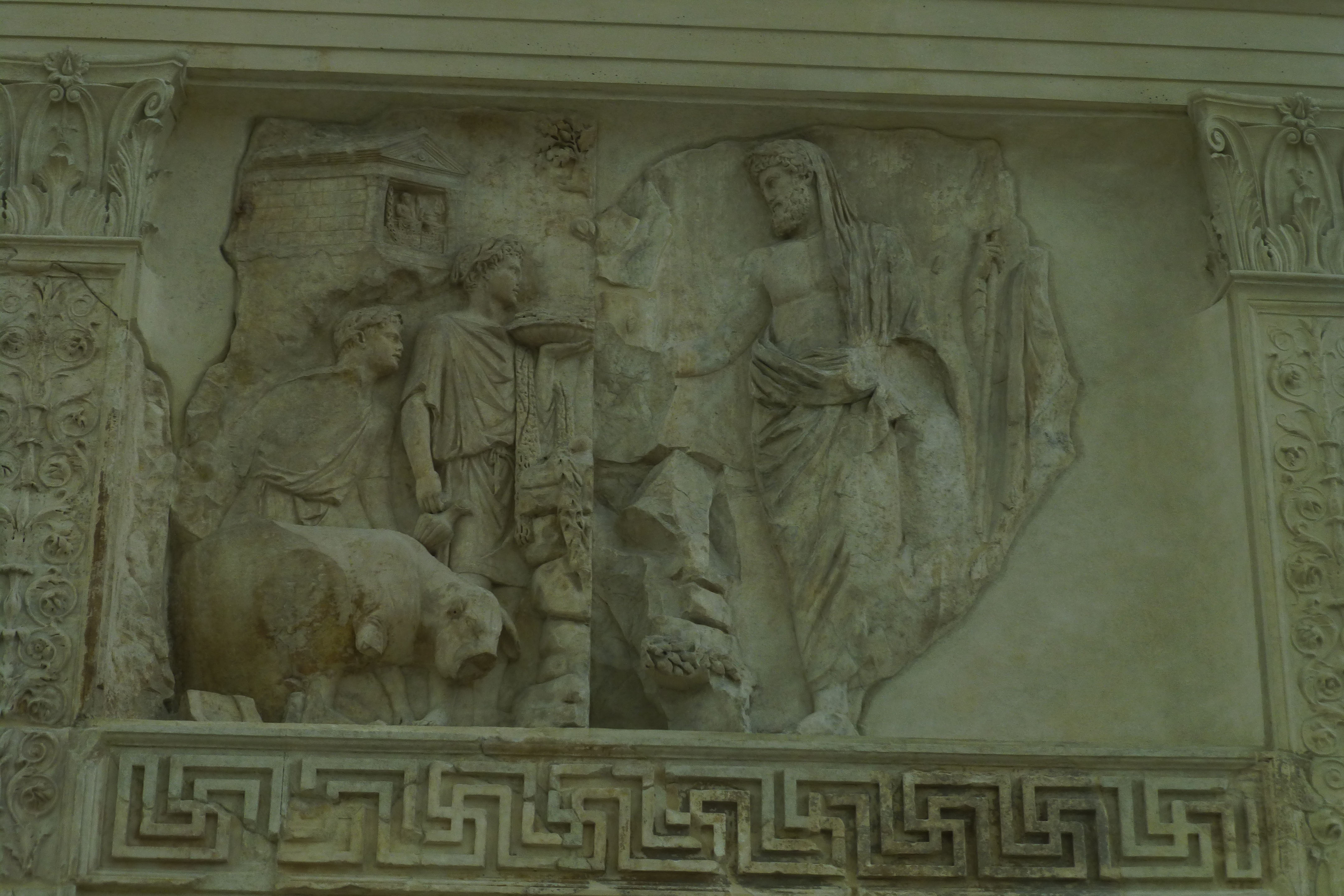
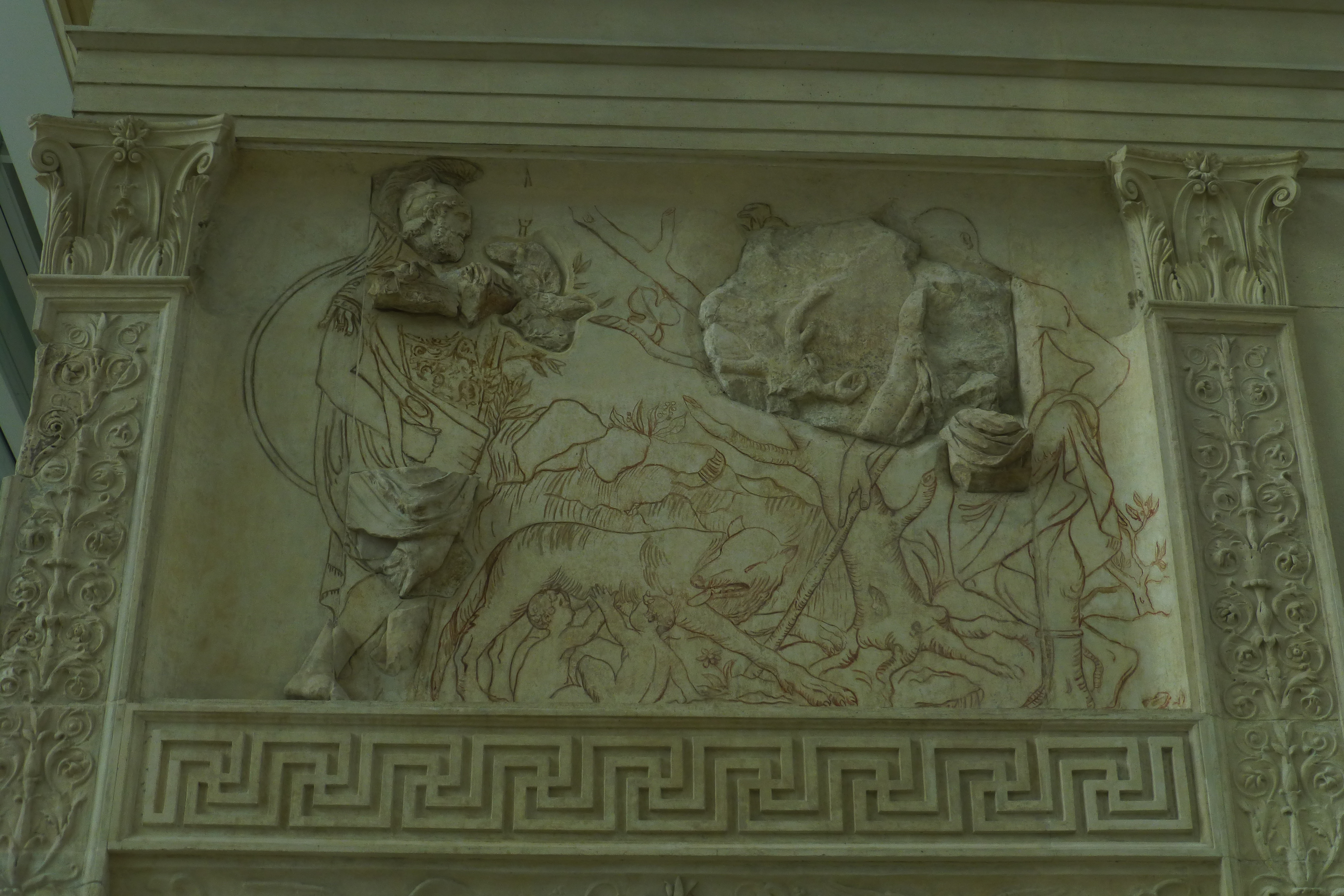
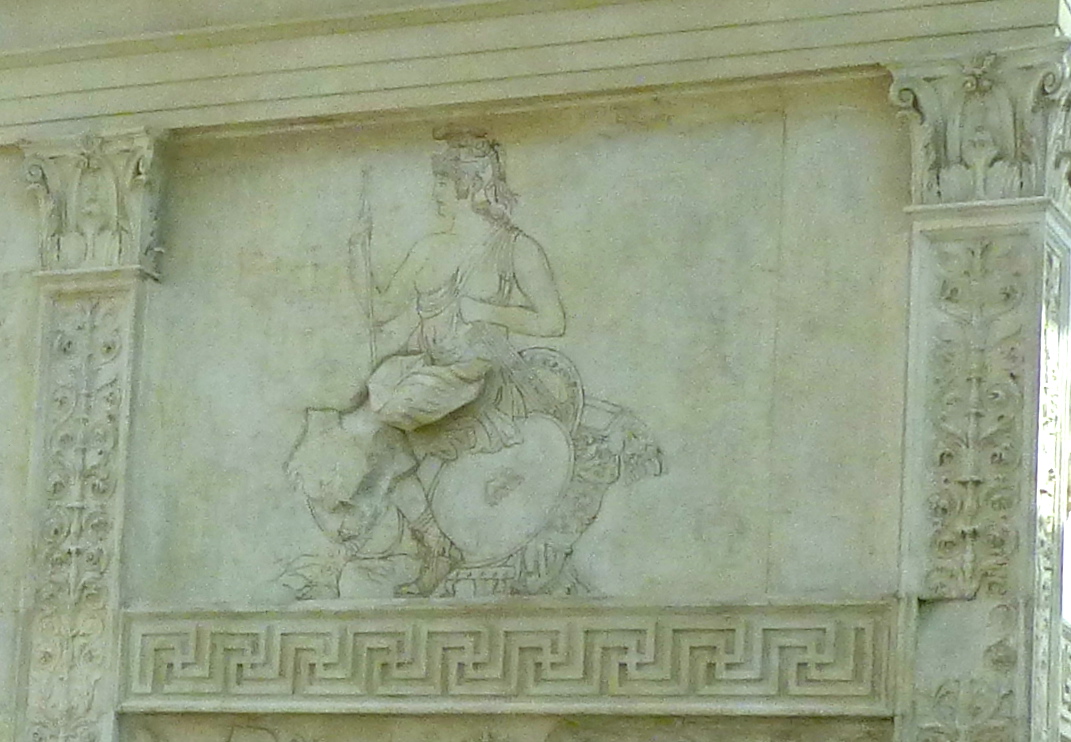
In a previous post, I wrote about Dom’s matrix for peace in the Roman world:  first religion, then war, then victory, and finally peace. And it is literally displayed on the four  huge panels on the Ara Pacis Augustae, which was reassembled from bits all across Europe (a few are still in the Louvre) and is now housed in a beautiful glass museum structure designed by American architect Richard Meier.
P1000932Religion: The first panel shows a scene from Aeneas, legendary founder of the Julian dynasty, making sacrifice.
P1000945
War: The next panel shows Romulus and Remus the founders of Rome with the God Mars (Ares).
P1000967 - Version 2
Victory: The goddess Roma sits on the captured battle gear of defeated enemies.
P1000937
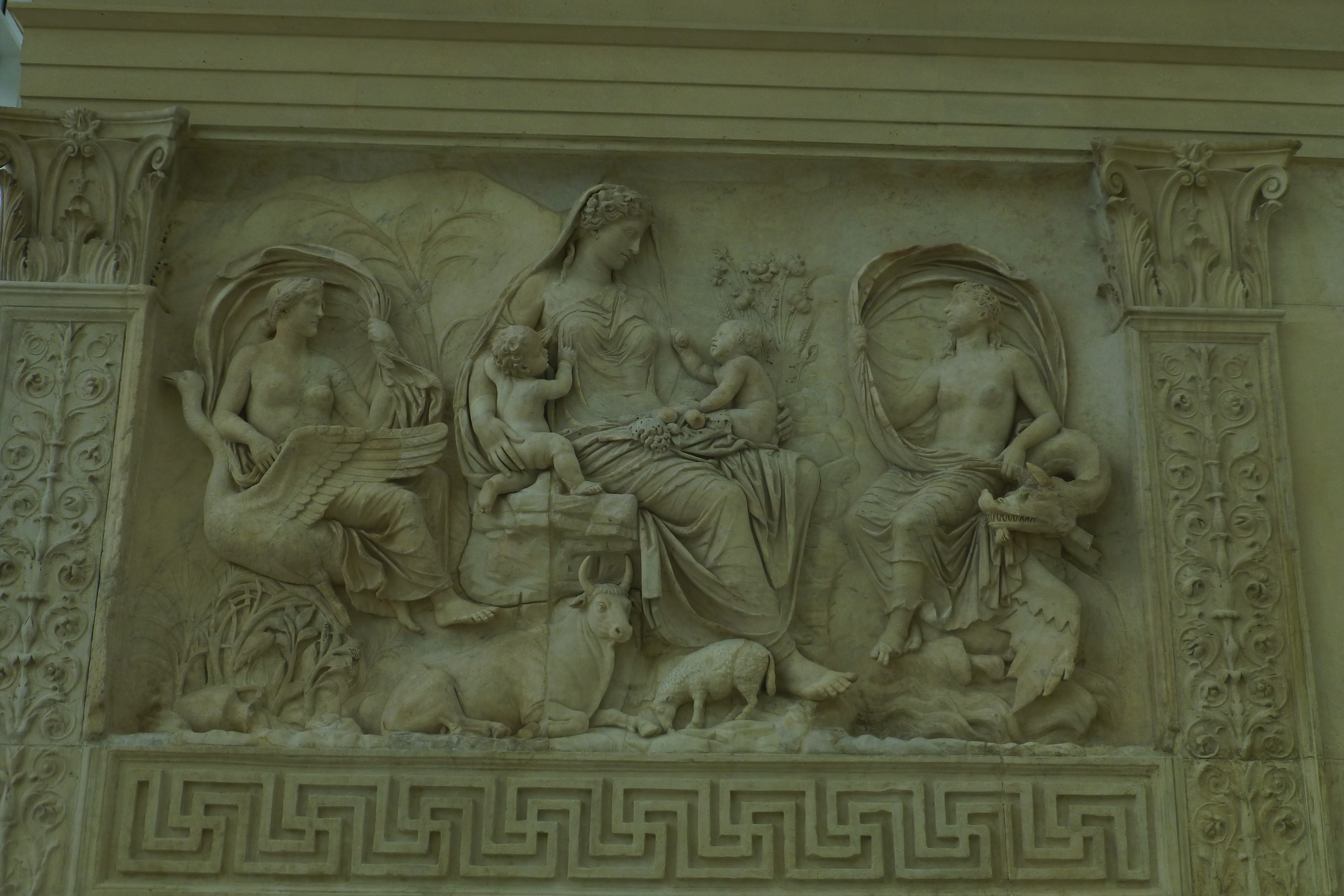
Peace: The goddess Pax, a personification of peace with children, fruits, cattle and abundance; the very picture of fecundity.
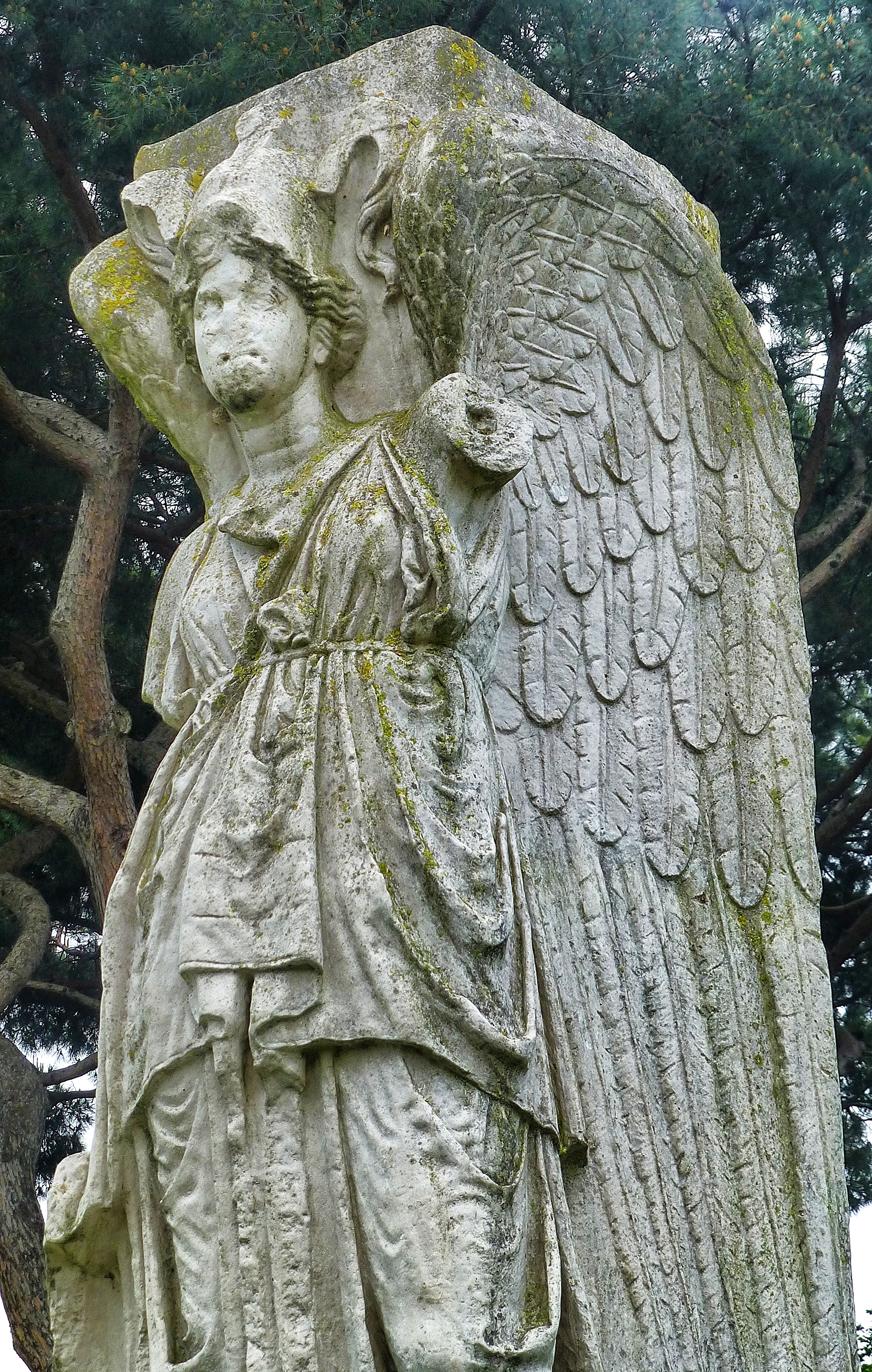
The order of this matrix – shown by the four main panels of the Ara Pacis – is critical. If we are devout and make sacrifice to the gods, it will assure that we can accomplish territorial aggrandizement: the very heart of empire, and therefore, imperial theology.  And if we have been true in our sacrifice and brave in war, it will assure our victory. (Think of the image that we call winged victory…looks an awful lot like what the church passes off as an angel….see below.) And After victory in battle, we will be rewarded with peace.
The Ara Pacis was commissioned in 13 BC and completed in 9 BC, as a celebration of Augustus’s victory and “pacifying” Gaul and Spain. Bits of it wound up in museums all over Europe (and some still resides in the Louvre).
Not St. Michael....the Nike from Ostia.

Not St. Michael….the Nike from Ostia.

This matrix is not entirely dissimilar to our own Pax Americana. How many times have we heard, “We are a Christian nation,” and then have those who have spoken those words rattle the sabers and go to war against an enemy like Iraq? (American combat deaths in Iraq totaled 3,542 and Iraqi civilian deaths totaled at least 116,000 according the UK’s Telegraph…all in search of nonexistent “weapons of mass destruction.” Are we more like Rome or more like Jesus?) The death toll in Iraq suggests victory, but the political instability caused by the war makes victory impossible to claim. Though neither was a “good leader,” Iran’s Ahmadinejad and Iraq’s Saddam kept each other in check. We in the U.S. sense relative peace because we do not live in Kabul or Baghdad or Gaza. But we don’t have true peace, just as the Romans in Italy didn’t have true peace while their legions were being slaughtered (and slaughtering) along the Rhine.

BSAO080303800L

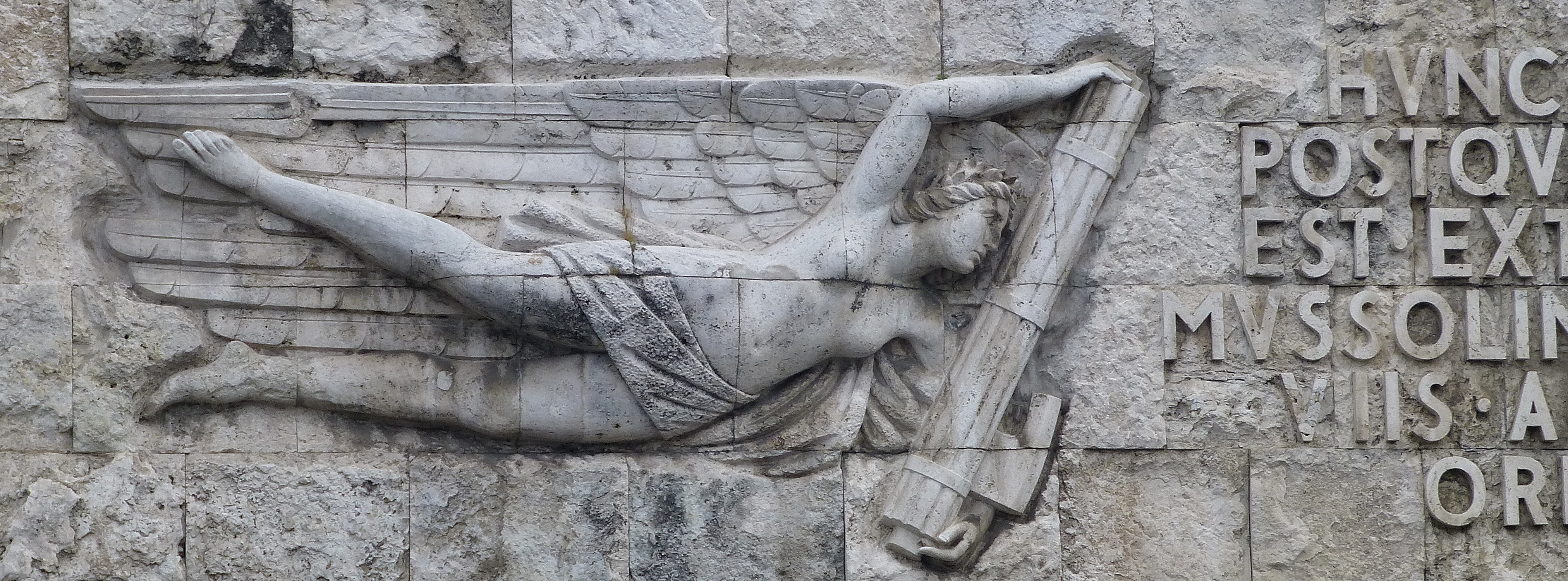
Look at the artifact, Benito!

Nike carrying fasces toward Mussolini's name...Fascist architecture near the mausoleum of Augustus.
Nike carrying fasces toward Mussolini’s name…Fascist architecture near the mausoleum of Augustus.
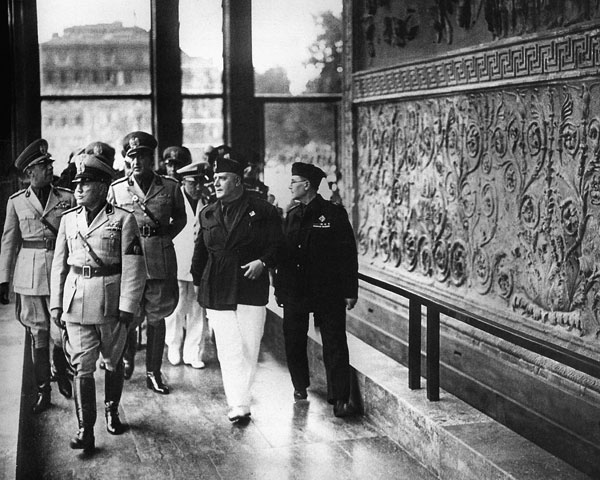
During the Fascist (from the Latin word, fasces, a bundle of bound rods with an ax…see photo: the Nike is carrying them) Era in Italy, Benito Mussolini used the Ara Pacis as an element of propaganda to show his connection with the Roman Empire. It was under his leadership that the Ara Pacis was reassembled. And when Adolf Hitler visited Rome in 1938, Mussolini included the Ara Pacis on the tour for the leader of the Third Reich. (Reich is the German word for empire.)

Paul4thcVatican

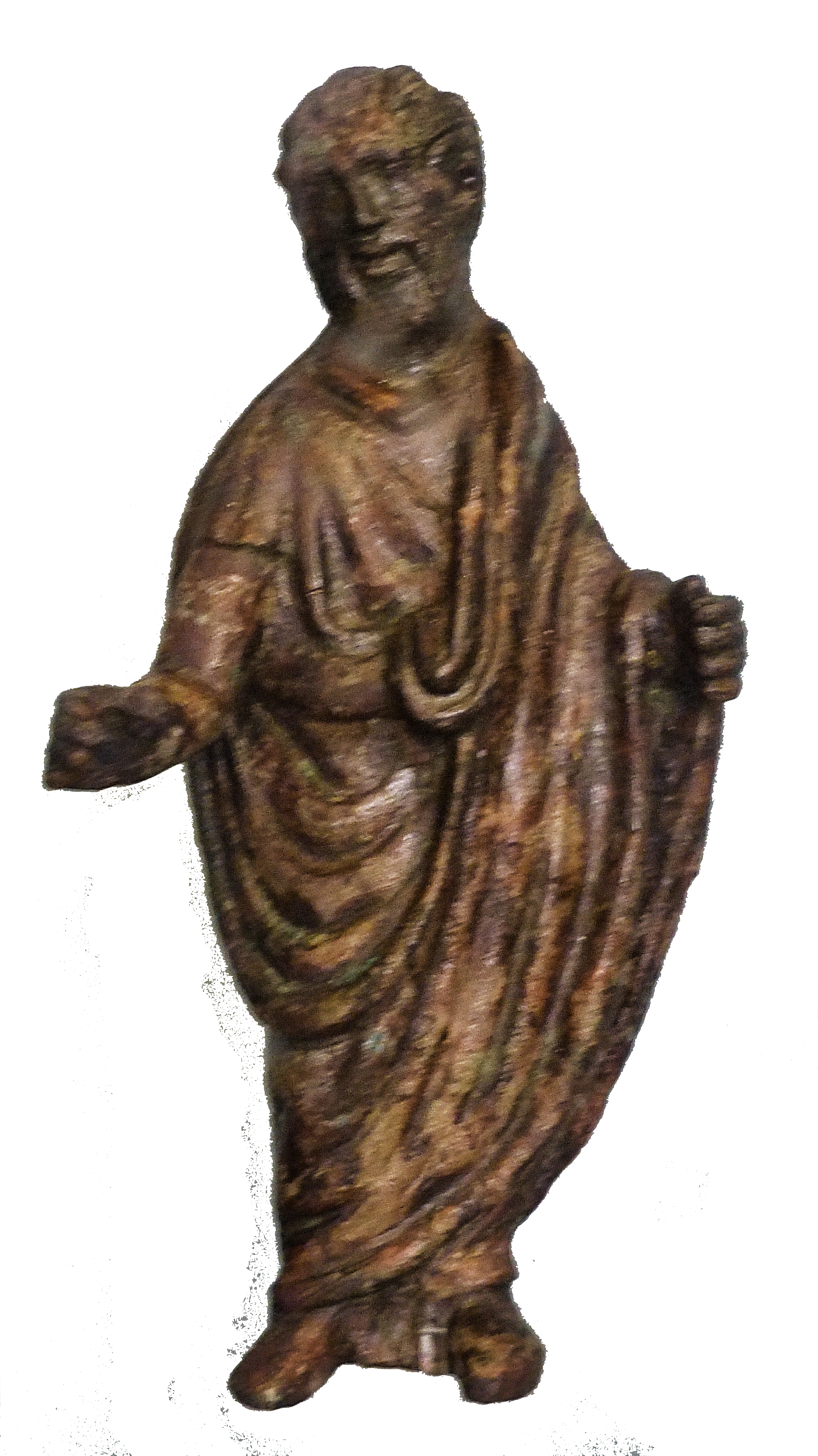
figurine of Paul, 4th century

So, what’s the alternative?

The matrix suggested by the apostle Paul, based on his own Judaism and on following Jesus is markedly different:

First, religion. Then justice. Then peace. (No war and no victory based on military superiority.) It’s the same matrix that the Hebrew prophets tried to instill in the people, against the will of leaders who wanted to adopt a matrix similar to Rome’s. Micah asks, “He has told you, O mortal, what is good: and what does the Lord require of you but to do justice, to love kindness, and to walk humbly with your God?” The concept of shalom is absolutely central to the kingdom of God Jesus proclaimed, and it is no accident at all that Paul’s opening to authentic letters uses this phrase, which condenses his theology into three words: Grace and peace.

Grace (charis) is an unearned gift and peace for Paul was not the absence of war, but the condition of right relationship with God and humankind based of just action and the wholeness of creation. When I graduated from divinity school, I had some beach stones I collected in Maine inscribed with the Greek word, charis, and on the reverse side, shalom. I gave one to each of my closest friends. (Amazing what gravestone companies will engrave!)

So, I guess the question left for each of us to grapple with is whose team do we want to play for? Which matrix do we want to adopt: Caesar’s of Jesus and Paul’s? Do we want to work toward war and victory as a means of pacification or do we want to work for justice and the road to true peace?

Seaports and Triumphal Arches

20130510-225128.jpg vb2vc
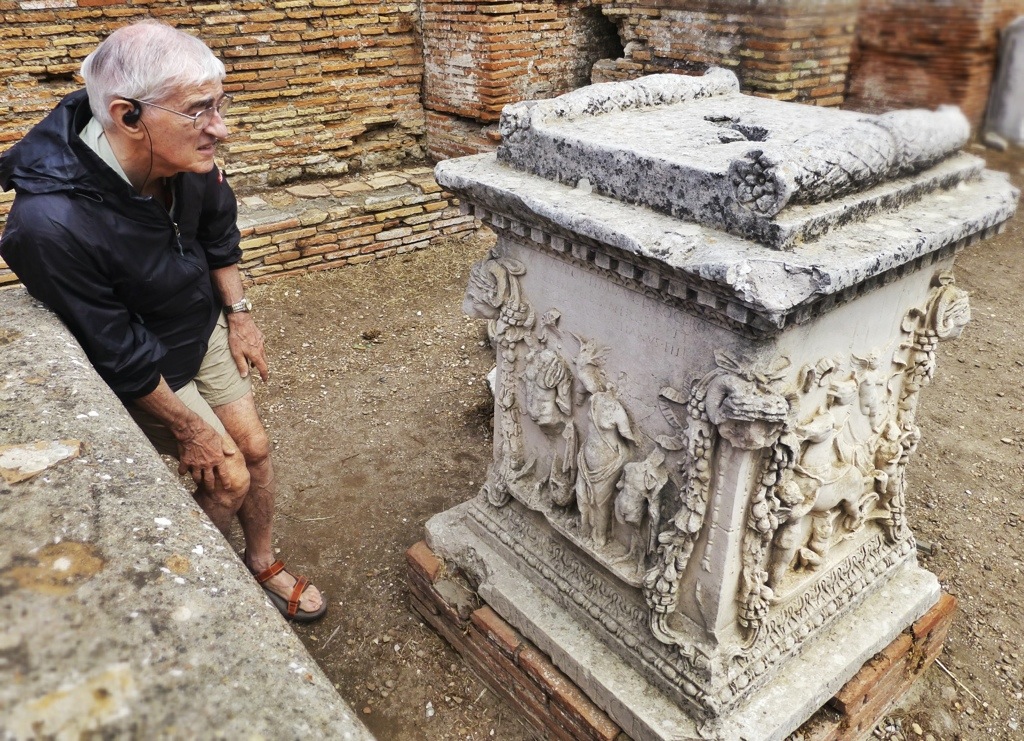
Dom Crossan examines an altar in Ostia Antica, the ancient seaport of Rome.
We started out the day with a visit to Ostia, the ancient seaport of Rome, which is now several miles inland (due to shift in the Tiber River, which is very muddy and deposit a lot of silt each year). I knew about Ostia, but not that it had been buried in river sediment for a couple of millennia before being excavated. There are also wonderful mosaics, especially from the trading stalls that surrounded the market…imagine the wide array of products from across the empire that were traded at Ostia.

20130510-225723.jpg
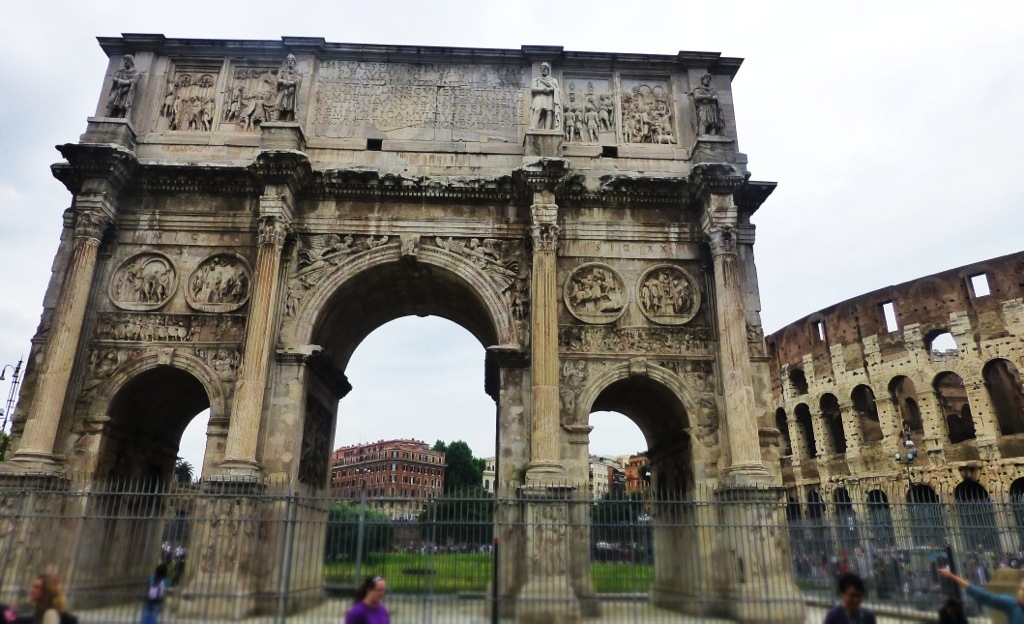
I later split off from the group to spend some extra time examining the Arch of Constantine, the first Christian emperor. The arch commemorated his triumph after the victory over his co-emperor Maxentius at the Battle of the Milvian Bridge. According to legend, at this battle, Constantine had a vision of the letters chi (X) and rho (P), which in Greek are the first two letters of the word christos or Christ. Sometimes you will still see those two Greek letters superimposed in churches (a long P running vertically through the center of the X). And you might also see the letters IHS in churches, which stand for In Hoc Signo vincat or “in this sign, I win,” which according to legend, Constantine had emblazoned on the shields of his troops, along with the chi-rho.
Funnily enough, there was no Christian iconography on column. (He hadn’t come out as a Christian yet…and the worst persecution of Christians in Rome had just ended.)

20130510-230556.jpg
And because the photos from last night’s post dinner walk to St. Peter’s Square turned out well, I’m including one as well. Loving being in Rome. Enjoying Marcus and Dom’s lectures each evening. Trying to soak up all the knowledge and sites we’re visiting. Tomorrow off to the Colosseum.
Pax!

Location, Location, Location

Roman emperors didn’t know everything, but good lord, they knew about real estate. Yeah, they acquired everything from the Scottish Borders through North Africa and past Syria and Iraq…but that quantity. Let’s talk quality.

20130508-213602.jpg
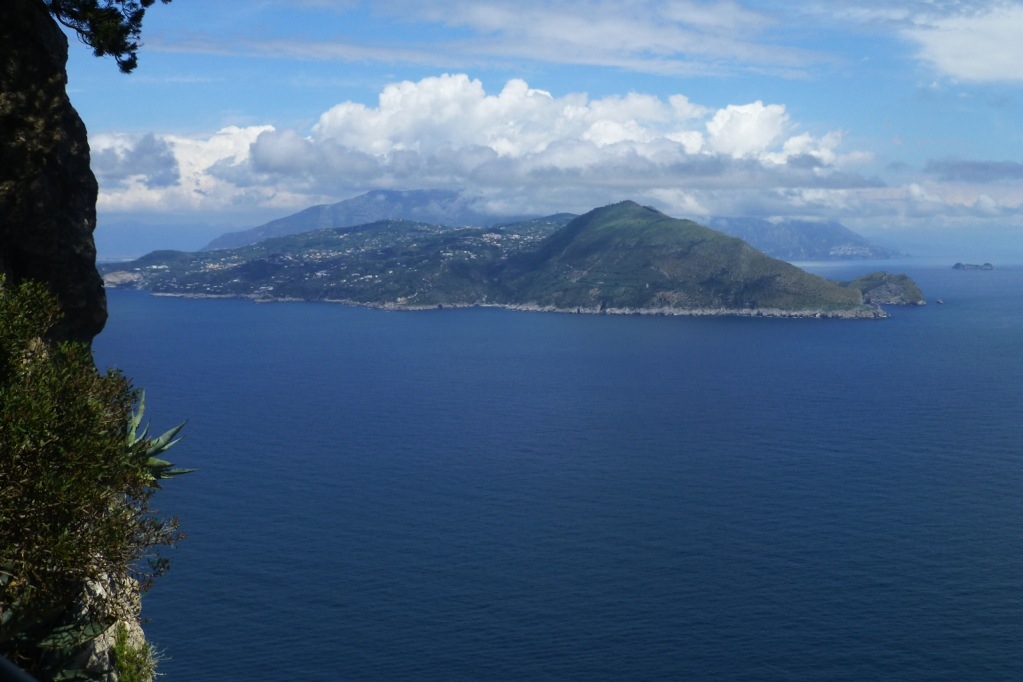
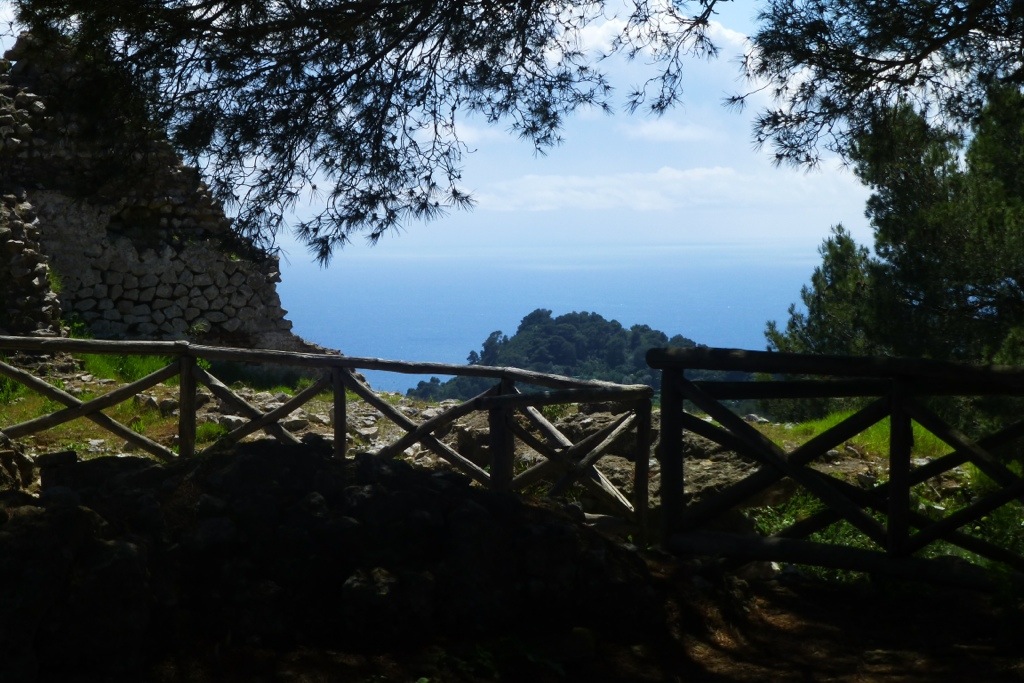
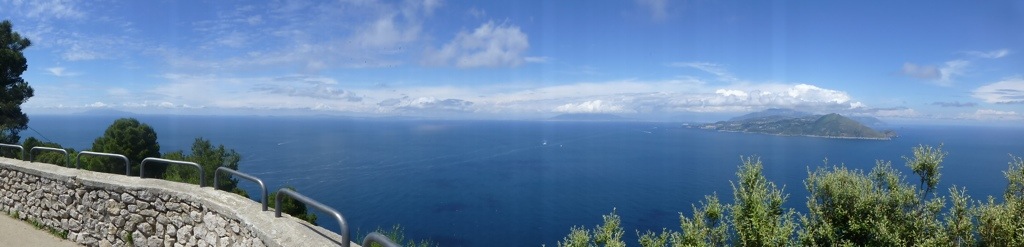
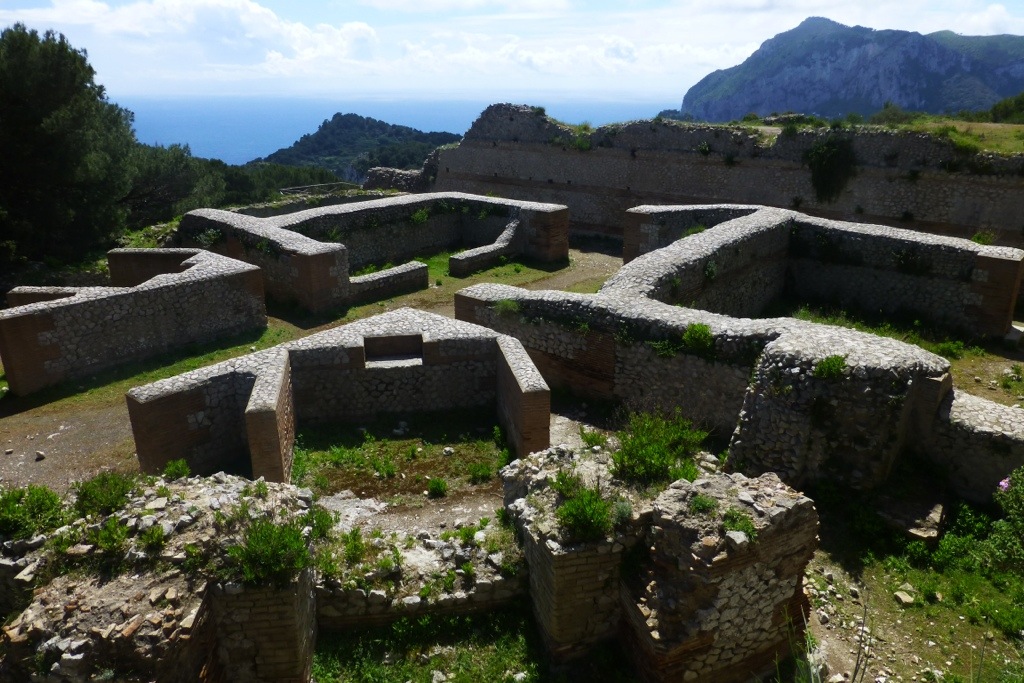
The island of Capri (home of capri pants and insalata di Caprese) is a paradise off the coast of Naples. Volcanic mountains that fall right into the Mediterranean are as dramatic and beautiful as the world gets. Augustus build a palace at the very zenith of the highest mountain (complete with huge cisterns to catch rainwater for the baths). It took a solid 45 minutes of strenuous vertical climbing to get to the place from which both Augustus and Tiberius ruled the Roman Empire.

20130508-214216.jpg
What struck me, after I caught my breath and stopped sweating, was that this was a great place to see what you, as emperor, commanded…and this was just a tiny peace of the homeland. It was awe-inspiring…which it was meant to be. We’ll see that again and again: awe matters with the emperors.

20130508-214744.jpg
The opulence of what the emperors experienced came at a tremendous cost of slave labor and lives. Tonight, Dominic was talking about Paul’s declaration of “dying and rising with Christ” meaning that early Christians died to the life of the culture at large, namely that which the Roman Empire valued: the patronage system and patriarchy. Marcus worked with Paul’s concept of there being neither Jew nor Greek, slave or free, male or female, which totally upsets the applecart of the ancient world order.

20130508-215503.jpg
The most impressive part of Capri wasn’t the Villa Iovis (Augustus’s palace, named to honor Jove) but rather the natural surroundings created by God and entrusted to us as stewards of the earth (and heirs of God, as Paul says). Tomorrow, we’re off to the catacombs in Rome.
Vale!

Who the hell was Marcus Holconius Rufus?

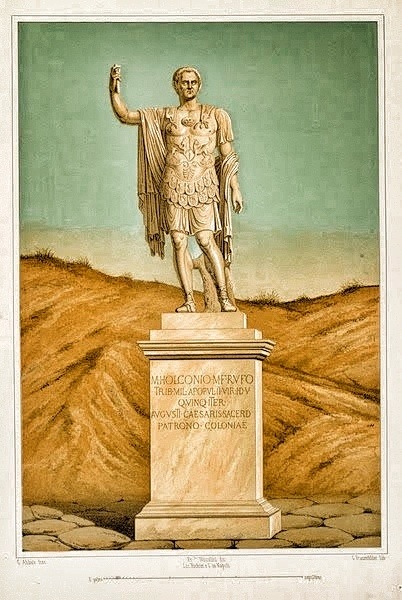
He was nobody I had ever heard of or read about until yesterday. He lived about the same time as Jesus, but in Pompeii. And if you really want to you can find out more about him on the internet. But, as I was wondering and sweating through the streets of Pompeii yesterday, I saw and inscription on a large marble pedestal:
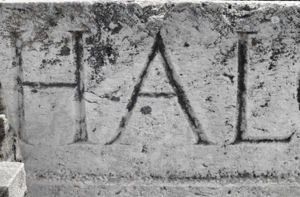
M(arcus) Holconius (son of Marcus) Rufus
military tribune of the people and duumvir [one of two elected officials]
quinquennial two times
Priest of Augustus
Patron of the Colony

20130505-221314.jpg
I actually brought stone-rubbing materials (a big wax crayon that looks like a hockey puck, masking tape, and rag paper) so that I could do stone rubbings, and I got the above one from the base of a statue in Pompeii that originally supported the statue of Marcus Holconius. The statue itself has been moved to the museum in Naples, but I found a painting of it in situ (though it was located at a busy intersection of two streets…not in a field).

20130505-223556.jpg

20130505-223625.jpg
It’s pretty cool to rub something that was created more than 2,000 years ago, was buried by volanic ash for 1800 years, and is right out in the open for touching and viewing. I made the mistake of asking at the Naples museum if I could do a rubbing of stones in the courtyard….I decided at Pompeii to forge ahead and ask for forgiveness if necessary. No one seemed bothered by my activity.
So, why is Marcus Haloconius of interest? He was one of the major political players in Pompeii and as such was a priest of Augustus…the same one Luke writes about (Caesar Augustus) and who was described with such titles as:
Son of God
Lord
Prince of Peace
Savior
Divine
Redeemer

Where have you heard those titles before? Probably not in relation to the divine Augustus. He was also conceived of a human mother and a divine father (Apollo), and the good tidings about him were described by the Greek word, euaggelion (eu = good + angelion = news), which of course is the word we use to describe news of Christ (the evangel, good news, gospel).
And if Jesus is Lord, Prince of Peace, Savior, etc. it means that Caesar is not. That is treason. It is the point at which the worldview of Christianity and Rome meet and clash. It happens in front of Pontius Pilate, and it happens again with Paul the Apostle.
We don’t know if Marcus Holconius Rufus ever even heard of Jesus (probably not), but we do know that he was one of the people in Pompeii who helped to worship Augustus. It was the worldview that he helped perpetuate and that Paul would challenge.
Dom Crossan suggests that the matrix for peace in the Augustus view was religion then war then victory then peace. That is the “normal” path for humanity. Jesus and Paul, he says, work from a different matrix: religion, then justice, then peace. It is worth asking in which paradigm our own nation operates.
Paul writes to the church in Corinth, “For it is the God who said, ‘Let light shine out of darkness,’ who has shone in our hearts to give the light of the knowledge of the glory of God in the face of Jesus Christ. But we have this treasure in clay jars, so that it may be made clear that this extraordinary power belongs to God and does not come from us.”
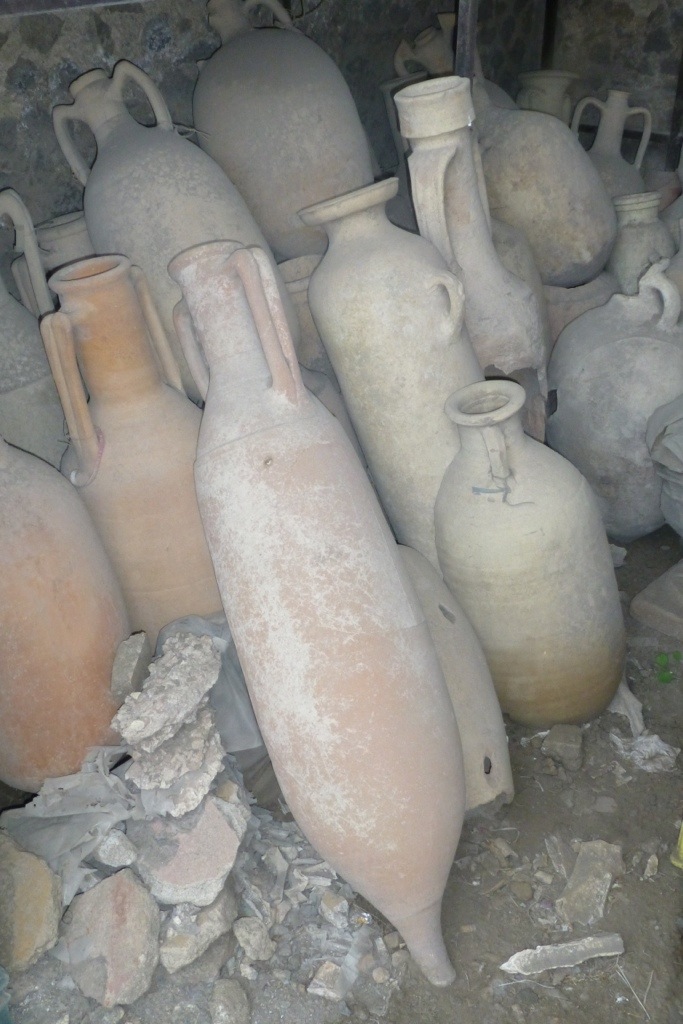
I had never seen amphorae before…so here are clay jars…the kind to which Paul refers. May you find light.

20130505-225308.jpg

A Long Day in Pompeii

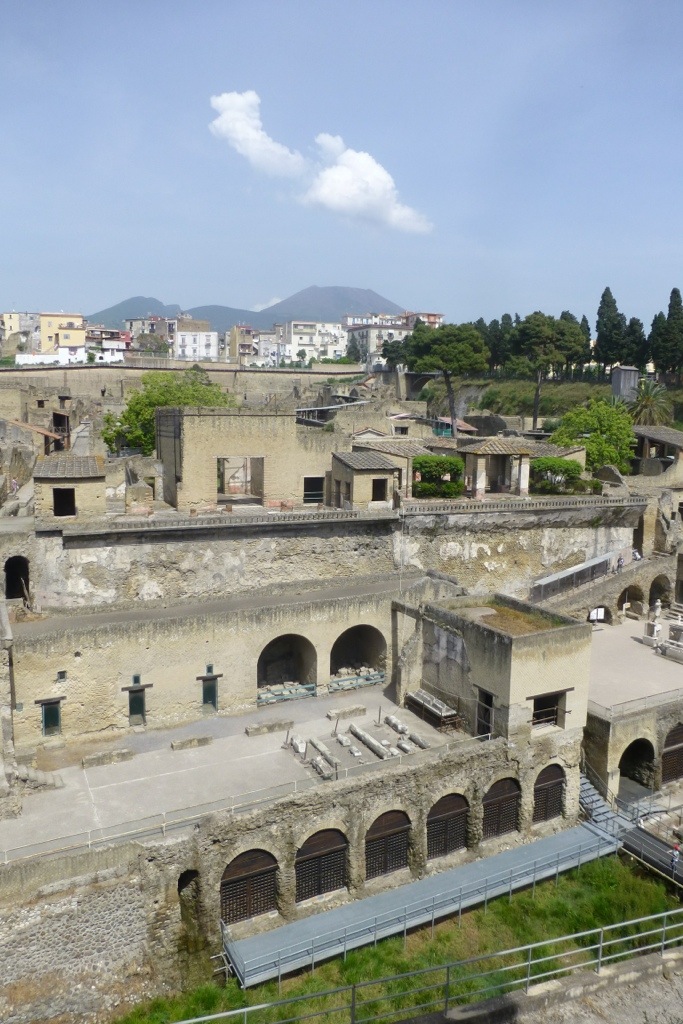
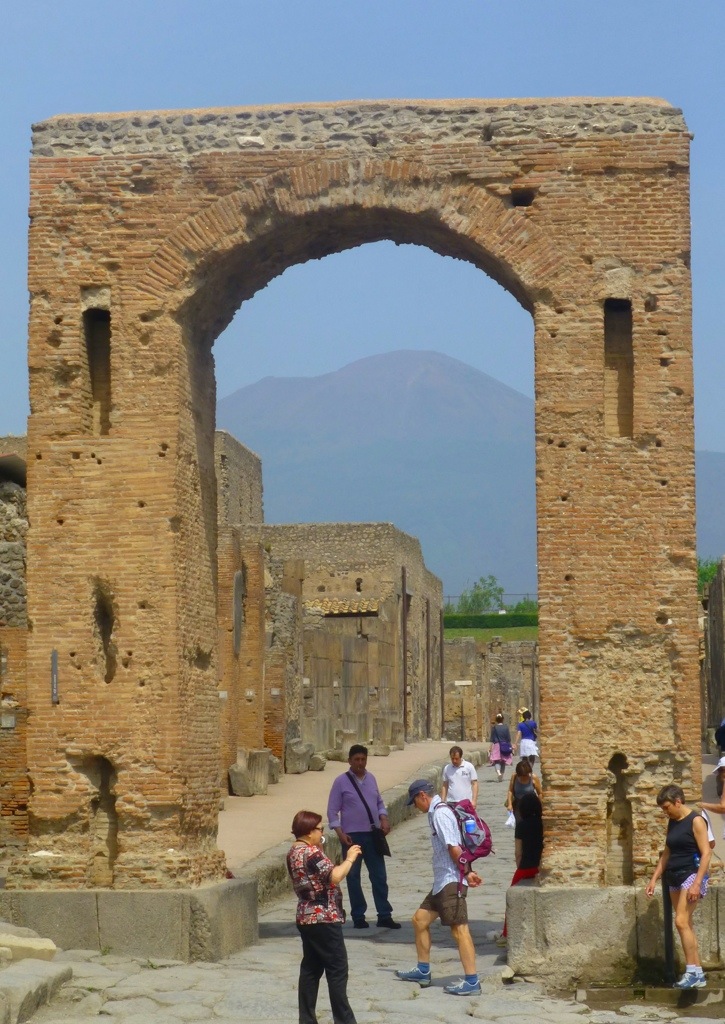
We spent a long, really warm (hot?) day in Pompeii and Herculaneum…though it was cool and calm compared to August 24, 79 AD when Vesuvius erupted. You probably know the story, and may even have seen the Pompeii exhibit in Denver last year, but both cities were buried in ash and other pyroclastic material and remain buried until the 18th and 19th centuries respectively. (If you’ve been reading my blog, you’ve seen a photo of Vesuvius from Pompeii at the heading.)
I’m kind of wiped out, but thought I’d post a few photos…explanation and analysis come later. The cool thing was that we saw many of the household items, frescoes, and mosaics yesterday in the National Arch. Museum in Naples.
Continuing to love the espresso, the food, and being with the Borgs and Crossans.
Ciao!

20130504-224559.jpg
(I love cultures that can spell my name.)

20130504-224646.jpg
A triumphal arch…brick underneath, originally sheathed in heavy plaster.

20130504-224804.jpg

20130504-224926.jpg

20130504-225001.jpg

<a
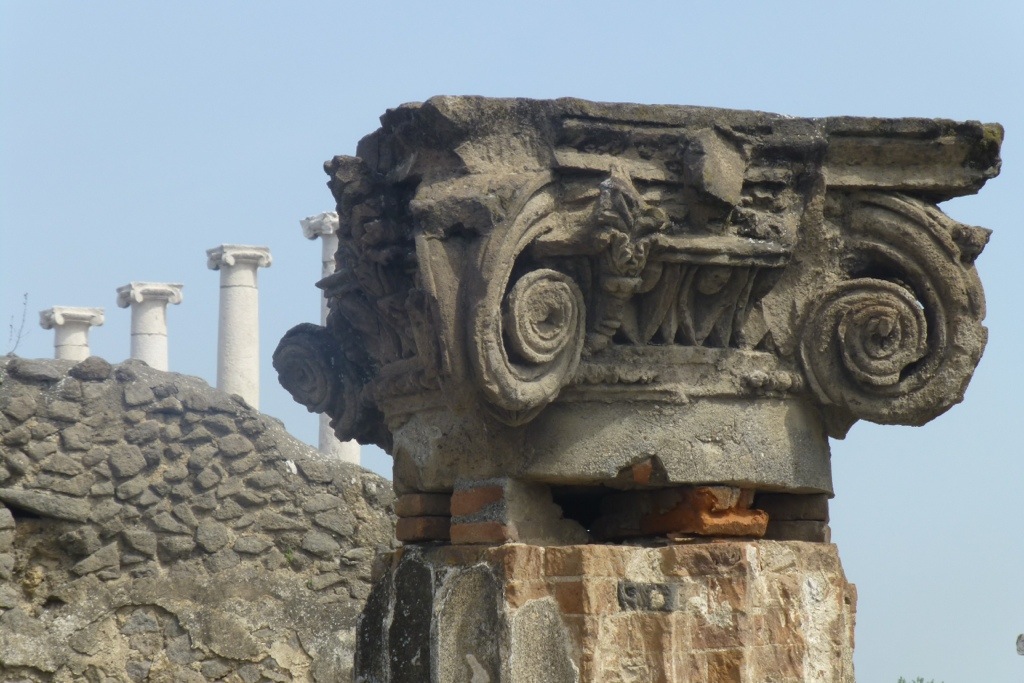
Pompeiian arches and capitals.